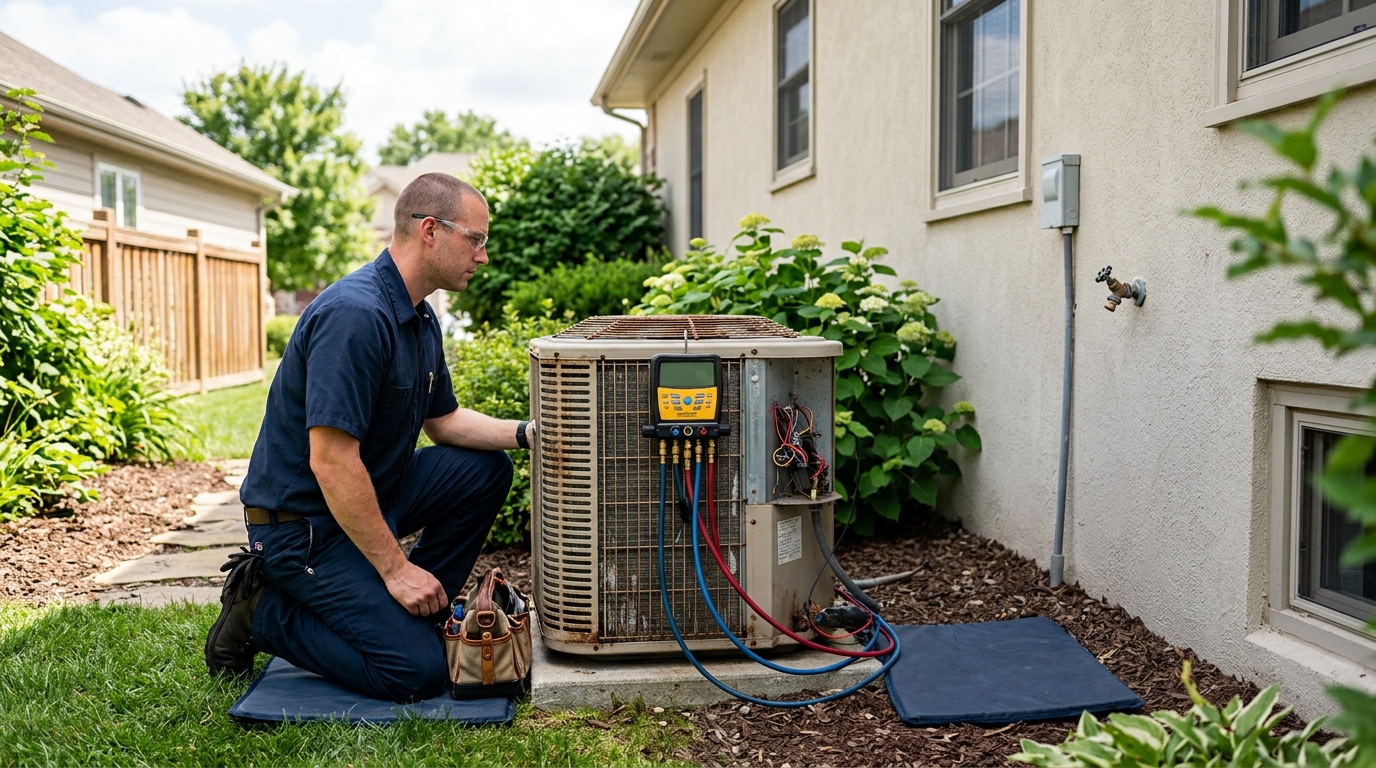
Air conditioners are designed to provide years of dependable cooling, but they do not have a fixed expiration date.
Two AC systems installed in the same year can have very different service lives depending on installation quality, maintenance, annual operating hours, airflow, equipment sizing, environmental conditions, and individual component wear.
As a general planning range, many central residential air-conditioning systems can provide approximately 10 to 15 years of useful service, while some well-maintained systems operate longer. Equipment age alone, however, should never be the only reason for replacement.
For Michigan homeowners, annual cooling demand is generally concentrated into a shorter season than in warmer climates. Even so, hot and humid summer periods can place significant demand on cooling equipment.
Homeowners evaluating air conditioning services should therefore consider AC age alongside repair frequency, energy consumption, comfort, refrigerant type, and the overall condition of the system.
Quick Answer
A central air conditioner commonly provides around 10 to 15 years of service, although actual lifespan varies considerably. Proper installation, routine maintenance, correct equipment sizing, airflow, annual usage, and timely repairs can all influence how long an AC system remains reliable.
An air conditioner does not automatically need replacement after ten years. Older equipment should be evaluated based on condition, efficiency, repair history, comfort, and expected future ownership costs.
Key Takeaways
- Many central air conditioners provide approximately 10–15 years of useful service.
- AC lifespan is a planning range rather than an exact expiration date.
- Installation quality can influence long-term reliability.
- Correct sizing can help avoid unnecessary cycling and operating problems.
- Routine maintenance can identify developing issues earlier.
- Frequent repairs can indicate declining reliability.
- Increasing electricity use may signal deteriorating performance.
- Equipment condition matters more than age alone when deciding whether replacement is appropriate.
Why Air Conditioner Lifespan Varies
Air-conditioning systems contain electrical, mechanical, and refrigerant components that experience wear over time.
How quickly that wear develops depends on many variables.
Important factors include:
- Equipment quality
- Installation quality
- Annual cooling hours
- Maintenance history
- Airflow
- Equipment sizing
- Thermostat settings
- Ductwork condition
- Outdoor environment
- Individual component wear
A correctly installed system operating under favorable conditions may remain dependable longer than similar equipment subjected to poor airflow, excessive cycling, or years of neglected maintenance.
That is why homeowners should think of lifespan as a range rather than a countdown.
How Michigan’s Climate Influences AC Lifespan
Michigan air conditioners generally experience less annual runtime than comparable systems in regions requiring cooling for most of the year.
That can potentially reduce annual operating wear.
However, Michigan summers can still include extended periods of heat and humidity during which the air conditioner operates for many hours each day.
Seasonal operation also creates another consideration: the system may remain unused throughout winter and then be expected to perform reliably when cooling demand suddenly returns.
Pre-season inspection can therefore be valuable, particularly for aging equipment.
What Happens to an Air Conditioner as It Ages?
An air conditioner does not normally lose all cooling capacity at once.
Individual components experience wear at different rates.
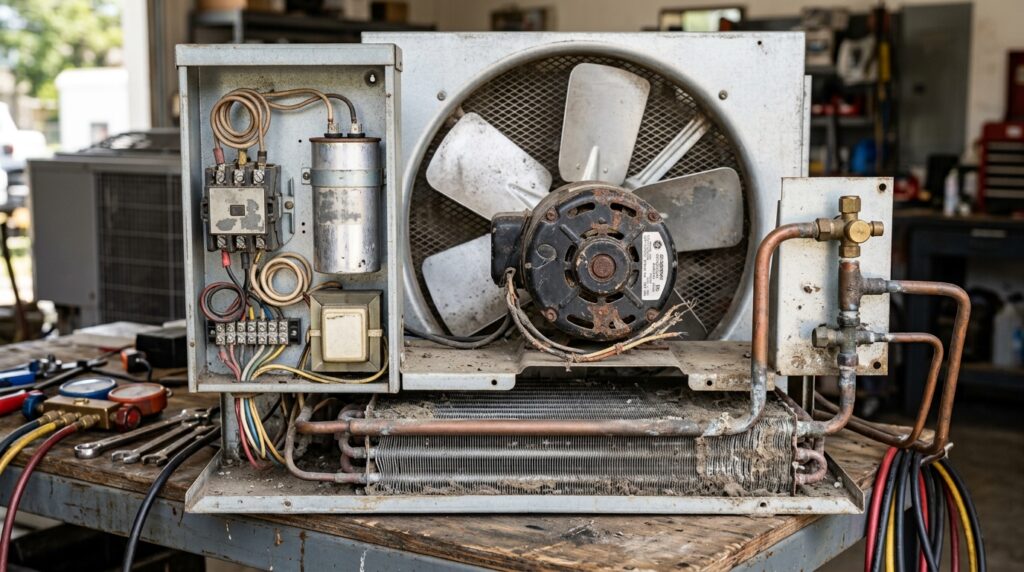
Depending on the system, aging may affect:
- Compressor
- Condenser fan motor
- Blower components
- Capacitors
- Contactors
- Electrical controls
- Evaporator coil
- Condenser coil
- Refrigerant circuit
Many individual component problems can be repaired.
That is why one breakdown does not necessarily indicate that the entire system has reached the end of its service life.
Professional AC repair in Ann Arbor, MI can help determine whether a failure is isolated or part of broader equipment deterioration.
Installation Quality Can Influence AC Life
The quality of the original installation can affect an air conditioner throughout its operating life.
Potential installation problems include:
- Incorrect equipment sizing
- Improper refrigerant charging
- Inadequate airflow
- Poor drainage
- Ductwork problems
- Electrical issues
Even high-quality equipment may perform poorly if these fundamentals are incorrect.
Installation should therefore be viewed as part of the system rather than simply the process of placing equipment at the home.
Correct AC Sizing Matters
A larger air conditioner is not automatically a better air conditioner.
Equipment should be matched to the home’s cooling load.
An oversized AC may:
- Cool the home quickly
- Operate in shorter cycles
- Create larger temperature fluctuations
- Provide less effective humidity management
An undersized AC may:
- Run for very long periods
- Struggle during hot weather
- Have difficulty reaching thermostat settings
Correct sizing considers factors such as home layout, insulation, windows, air leakage, ductwork, and local climate conditions.
ENERGY STAR’s HVAC quality installation guidance emphasizes proper equipment sizing as part of a quality HVAC installation.
Does Routine Maintenance Help an AC Last Longer?
Maintenance cannot guarantee that an air conditioner will operate for a particular number of years.
What it can do is help equipment operate under better conditions and identify developing problems earlier.
Professional HVAC maintenance service may include inspection of:
- Air filters
- Coils
- Electrical connections
- Refrigerant-related performance
- Condensate drainage
- Blower components
- Thermostat operation
- Overall system performance
ENERGY STAR recommends professional pre-season cooling-system checkups as part of routine HVAC care through its maintenance checklist.
Maintenance becomes particularly useful as equipment ages because changes in condition can be monitored over time.
Dirty Filters and Restricted Airflow Can Affect Equipment
Air conditioners depend on appropriate airflow through the indoor coil.
A heavily loaded filter can restrict that airflow.
Potential consequences include:
- Reduced cooling performance
- Longer operating cycles
- Increased blower workload
- Coil problems
- Reduced comfort
Homeowners should inspect filters regularly and replace or clean them according to system and manufacturer requirements.
The correct interval depends on factors such as:
- Filter type
- Pets
- Indoor air conditions
- Equipment usage
- Household occupancy
There is no single filter-replacement schedule appropriate for every home.
Outdoor Condenser Conditions Matter Too
The outdoor AC unit needs appropriate airflow to reject heat.
Over time, outdoor equipment may be affected by:
- Leaves
- Vegetation
- Dirt
- Lawn debris
- Physical damage
Homeowners can help by keeping the area around the condenser reasonably clear while avoiding actions that could damage delicate components.
Internal cleaning or technical service should be performed according to manufacturer recommendations and appropriate professional procedures.
How Frequent Repairs Relate to AC Lifespan
An occasional repair is normal over the life of mechanical equipment.
The pattern becomes more important when breakdowns begin occurring repeatedly.
For example:
A capacitor failure on an otherwise reliable system may provide little reason to consider replacement.
A compressor or coil problem on an older system that has already required multiple repairs deserves a much broader financial evaluation.
As equipment ages, homeowners should track:
- Number of repairs
- Cost of repairs
- Components being replaced
- Time between breakdowns
- Overall cooling performance
Increasing repair frequency can indicate that the system is becoming less dependable even if it continues operating between service calls.
Rising Electricity Consumption Can Be Another Clue
Aging equipment may continue cooling while operating less economically.
However, homeowners should be careful when interpreting utility bills because cooling costs also depend on:
- Outdoor temperatures
- Electricity rates
- Thermostat settings
- Home insulation
- Air leakage
- Household behavior
A sustained increase in energy consumption under reasonably similar conditions deserves investigation.
The U.S. Department of Energy provides residential air-conditioning guidance explaining efficiency and other considerations affecting cooling-system energy use.
Increasing energy use becomes more significant when combined with other aging-system symptoms such as frequent repairs or declining comfort.
Is a 10-Year-Old Air Conditioner Too Old?
Not automatically.
ENERGY STAR recommends considering replacement when an air conditioner or heat pump is more than 10 years old, especially when frequent repairs, rising energy bills, or comfort problems are also occurring.
Its heating and cooling replacement guidance provides additional factors homeowners can consider.
The key word is consider.
A 10-year-old air conditioner that remains reliable and efficient may have useful service life remaining.
A system of similar age requiring repeated expensive repairs may be approaching a point where replacement makes greater financial sense.
Refrigerant Type Can Become Important as an AC Ages
Older air-conditioning systems may use refrigerants that are no longer produced or imported for new supply in the United States.
A common example is R-22.
Existing R-22 systems can still be serviced using recovered or reclaimed refrigerant, but refrigerant type may affect repair economics when a significant leak develops.
The EPA provides guidance for homeowners with older air-conditioning equipment.
An older refrigerant alone does not mean a working system must immediately be replaced.
It is simply another factor to evaluate alongside equipment age, repair cost, efficiency, and condition.
How to Help an Air Conditioner Last Longer
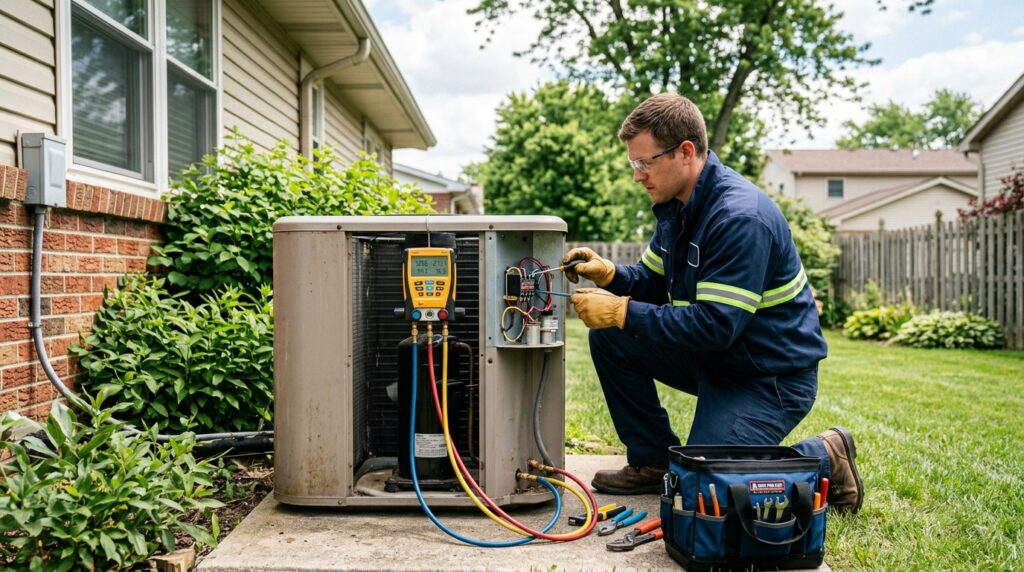
No maintenance routine can guarantee that an air conditioner will reach a particular age, but homeowners can reduce avoidable stress and help the system operate under better conditions.
Useful practices include:
- Replacing or cleaning filters when needed
- Keeping supply and return vents unobstructed
- Scheduling seasonal professional maintenance
- Keeping the outdoor condenser reasonably clear
- Addressing unusual noises promptly
- Correcting airflow problems
- Investigating refrigerant issues
- Maintaining appropriate thermostat settings
For Michigan homeowners, spring maintenance can be especially useful because it provides time to identify problems before the cooling season reaches peak demand.
Routine Maintenance Becomes More Important as the AC Ages
Older air conditioners benefit from closer monitoring because component wear becomes more likely over time.
Professional HVAC maintenance service can help evaluate:
- Electrical components
- Coils
- Refrigerant-related performance
- Blower operation
- Condensate drainage
- Thermostat response
- Airflow
- Overall system condition
Regular inspections also create a useful service history that can help homeowners understand whether the equipment is remaining stable or gradually deteriorating.
Repair Problems Before They Create Additional Stress
Some air-conditioning problems begin small but can affect other parts of the system if they continue unresolved.
Examples include:
- Restricted airflow
- Dirty coils
- Electrical wear
- Drainage issues
- Refrigerant problems
- Fan or motor problems
Professional AC repair in Ann Arbor, MI can help determine whether the issue is minor and repairable or part of a broader decline in system condition.
The goal is not to replace equipment prematurely, but to prevent correctable issues from remaining unresolved for long periods.
Thermostat Settings Can Affect AC Runtime
Thermostat habits influence how often and how long an air conditioner operates.
During hot weather, setting the thermostat much lower than usual does not necessarily cool the home faster. It may simply cause the system to run longer.
Reasonable and consistent settings can help avoid unnecessary runtime while maintaining comfort.
Programmable and smart thermostats may help homeowners establish schedules that match household routines.
The important point is consistency: an AC system should not be expected to overcome unrealistic indoor temperature targets during extreme heat without substantially increasing operating time.
Ductwork Problems Can Affect AC Lifespan
The air conditioner is only one part of the cooling system.
Once air is conditioned, the blower must distribute it through the ductwork. Problems in that distribution system can affect both comfort and equipment operation.
Potential duct issues include:
- Air leakage
- Restrictions
- Poorly sized ducts
- Inadequate return airflow
- Damaged duct sections
- Poor balancing
If ductwork causes the system to run longer or operate with restricted airflow, AC equipment may experience additional stress.
Professional air conditioning services can help evaluate both the cooling equipment and the broader air-distribution system.
Repair or Replace an Aging Air Conditioner?
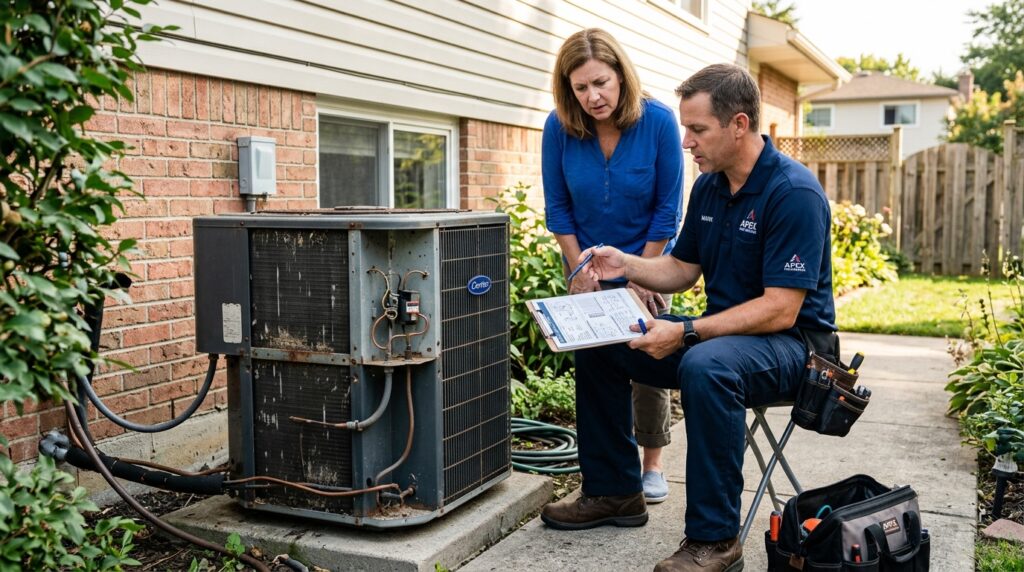
As equipment gets older, homeowners should evaluate repairs differently than they would on a newer system.
Repair may still make sense when:
- The problem is relatively minor.
- The system has been reliable.
- Repair costs are reasonable.
- Cooling performance remains good.
- Energy use remains acceptable.
- No major component problems exist.
Replacement deserves stronger consideration when:
- Repairs are becoming frequent.
- A major compressor or coil problem develops.
- Electricity consumption keeps increasing.
- Comfort has declined.
- Refrigerant concerns complicate servicing.
- Equipment has several aging-related problems at once.
The most useful comparison is not simply repair cost versus replacement price.
It is the expected future cost and reliability of keeping the existing system versus installing new equipment.
Don’t Use a Simple Age Rule
Rules such as “replace every AC after 10 years” are too simplistic.
A ten-year-old air conditioner can still be dependable.
A newer system can also develop a major failure.
Age should be treated as context, not a verdict.
Aging equipment deserves closer evaluation when it also shows symptoms such as:
- Repeated repairs
- Rising energy use
- Longer operating cycles
- Reduced cooling
- Poor humidity control
- Abnormal noise
The combination of age and performance changes provides a more reliable basis for replacement decisions.
SEER2 and Efficiency Matter More as Equipment Ages
When homeowners begin comparing aging equipment with replacement options, energy efficiency becomes an important part of the financial calculation.
New air conditioners are commonly rated using SEER2, which reflects seasonal cooling efficiency under standardized testing conditions.
A higher SEER2 rating generally indicates greater efficiency, but the real-world financial benefit depends on:
- Annual cooling demand
- Electricity prices
- Equipment cost
- Home insulation
- Duct condition
- Expected ownership period
- Installation quality
For Michigan homeowners, the shorter cooling season compared with hotter climates may influence how quickly higher-efficiency equipment pays back its added upfront cost.
Efficiency should therefore be considered alongside total ownership value rather than viewed in isolation.
When Should You Start Budgeting for AC Replacement?
Homeowners do not need to wait until complete equipment failure before thinking about replacement.
Planning becomes reasonable when an older AC begins showing a pattern of:
- More frequent repairs
- Increasing operating costs
- Long cooling cycles
- Declining comfort
- Major component wear
- Refrigerant-related concerns
Budgeting early allows homeowners to compare:
- Equipment options
- Efficiency levels
- Installation requirements
- Warranty coverage
- Financing needs
- Contractor qualifications
Planning ahead can make the eventual decision much less stressful.
Spring Is a Good Time to Evaluate Older Cooling Equipment
For Michigan homeowners, spring is often a practical time to evaluate aging air-conditioning systems.
The AC may have been inactive for months, and an early inspection can reveal problems before sustained warm weather arrives.
Useful pre-season checks include:
- Startup operation
- Cooling performance
- Outdoor condenser condition
- Airflow
- Thermostat response
- Drainage
- Unusual noises
If a major issue appears, homeowners have more time to compare repair and replacement options before the system becomes essential.
A New AC Still Needs Maintenance
Replacement does not eliminate maintenance requirements.
New systems still benefit from:
- Filter replacement
- Coil inspection
- Electrical checks
- Drainage inspection
- Thermostat testing
- Airflow verification
Routine service helps protect the new system and provides an early baseline for future performance.
Homeowners should also review manufacturer maintenance recommendations and keep service records, especially when warranty terms require documented care.
Choosing an AC Service Provider
Whether a system needs routine maintenance, repair, or replacement planning, contractor quality matters.
Homeowners may wish to consider:
- Appropriate licensing and insurance
- Residential cooling experience
- Diagnostic capabilities
- Load-calculation practices
- Refrigerant expertise
- Written proposals
- Warranty support
- Maintenance programs
Many homeowners also review public business profiles to evaluate reported customer experiences, responsiveness, and service quality alongside technical qualifications.
Customer reviews are most useful when they complement—not replace—professional credentials and written service details.
When Should an Older AC Be Professionally Evaluated?
Professional evaluation becomes especially useful when several warning signs appear together.
Examples include:
- Multiple recent repairs
- Noticeably longer cooling cycles
- Increasing electricity use
- Poor humidity control
- Difficulty reaching thermostat settings
- Abnormal operating noise
- Major component issues
A qualified technician can help determine whether the symptoms result from the AC itself, ductwork, airflow, thermostat problems, or other home conditions.
This helps prevent homeowners from replacing equipment when the underlying problem lies elsewhere.
Conclusion
Air conditioner lifespan is best treated as a planning range rather than an expiration date.
Many central AC systems provide roughly 10 to 15 years of service, while some operate longer and others require replacement sooner.
Actual lifespan depends on several factors, including:
- Installation quality
- Equipment sizing
- Maintenance
- Airflow
- Annual usage
- Environmental conditions
- Mechanical wear
For Michigan homeowners, the most useful approach is to monitor the system’s pattern of performance over time.
An older air conditioner that remains dependable, reasonably efficient, and inexpensive to maintain may continue providing useful service.
An aging system that develops repeated repairs, rising energy consumption, declining comfort, long cooling cycles, refrigerant concerns, or major component problems deserves closer evaluation.
Planning before complete failure gives homeowners time to compare repair and replacement options, understand efficiency ratings, evaluate contractors, and make a decision based on long-term reliability, comfort, and value.
Frequently Asked Questions
How long does a central air conditioner usually last?
Many central air conditioners provide roughly 10 to 15 years of service, although actual lifespan varies based on installation quality, maintenance, annual use, airflow, equipment sizing, and component wear.
Can an air conditioner last longer than 15 years?
Yes. Some systems continue operating beyond 15 years, particularly when they are well installed, regularly maintained, and have not developed major component problems. Older equipment should still be monitored more closely for efficiency and reliability.
Does Michigan’s climate help AC systems last longer?
Michigan typically has a shorter cooling season than hotter regions, which may reduce annual operating hours. However, hot and humid summer periods can still place significant stress on AC equipment.
Is a 10-year-old air conditioner too old?
Not necessarily. A 10-year-old system may still have useful life remaining if it is reliable, efficient, and well maintained. Age becomes more important when paired with frequent repairs, rising energy use, or declining comfort.
How do I know if my aging AC needs repair or replacement?
Homeowners should compare:
- Repair frequency
- Current repair cost
- Energy consumption
- Cooling performance
- Refrigerant type
- Equipment age
- Major component condition
Professional AC repair in Ann Arbor, MI can help determine whether the issue is isolated or part of broader system deterioration.
Can regular maintenance extend AC lifespan?
Routine HVAC maintenance service can help identify developing problems, support proper airflow, and reduce unnecessary wear. It cannot guarantee a specific lifespan, but it can help equipment operate under better conditions.
How often should an air conditioner be professionally serviced?
Most residential AC systems benefit from professional maintenance once each year, ideally before the cooling season begins.
Does ductwork affect how long an AC system lasts?
Yes. Leaky, restricted, or poorly designed ductwork can increase system runtime and reduce comfort. Professional air conditioning services can help evaluate both the cooling equipment and the distribution system.
Can rising electricity bills mean my AC is wearing out?
Yes. A sustained increase in electricity use may indicate declining efficiency, especially when weather, thermostat settings, and household routines have remained similar.
Does refrigerant type matter as an AC system gets older?
Yes. Older systems using phased-out refrigerants such as R-22 can become more expensive or difficult to service. Refrigerant type is especially relevant when a major leak or coil problem develops.
Should I replace an AC before it completely fails?
Not always. However, planning ahead can be helpful when an older system is already showing several warning signs. This allows more time to compare replacement options, efficiency levels, warranties, and installation proposals.
What should I consider before replacing an aging air conditioner?
Important factors include:
- Equipment age
- Repair history
- SEER2 efficiency
- Refrigerant type
- Ductwork condition
- Warranty coverage
- Expected ownership period
- Installation quality
The best decision is based on long-term value rather than age alone.