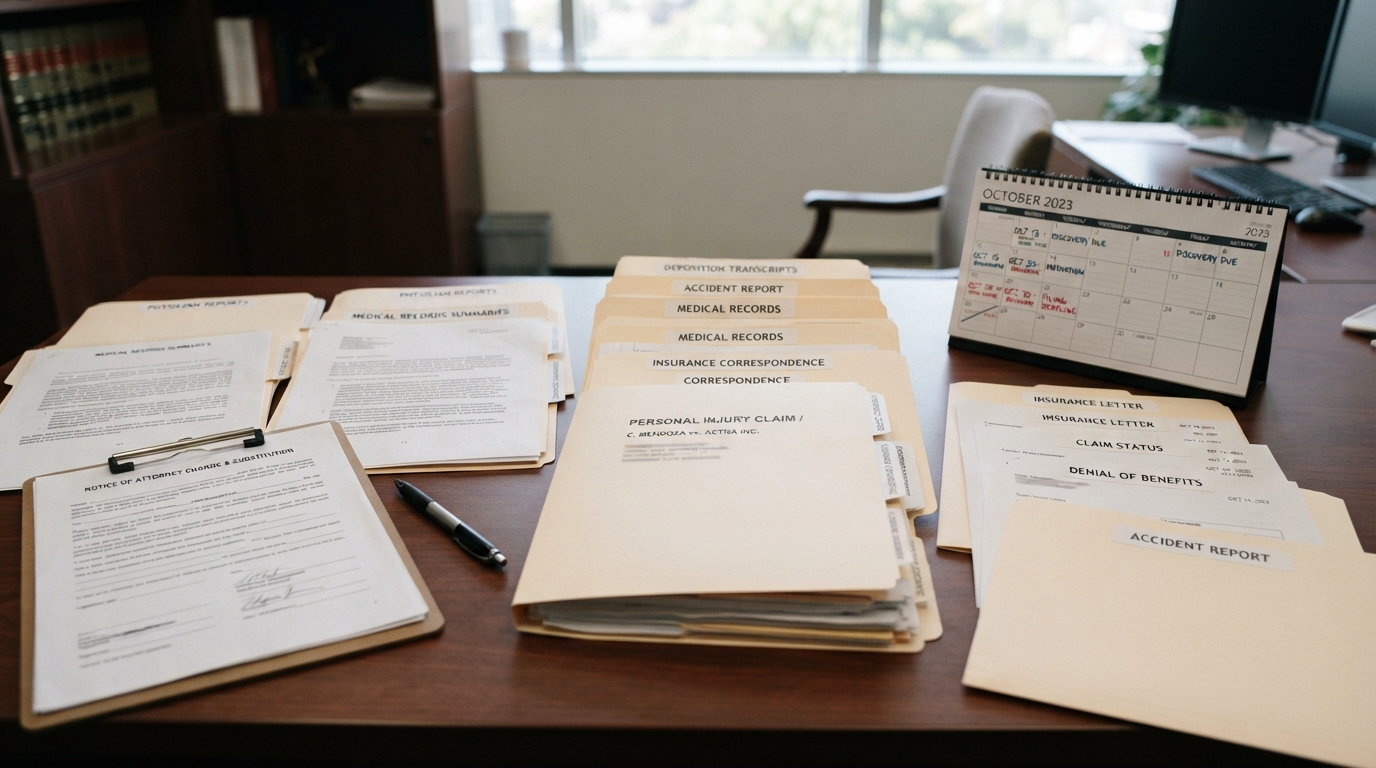
A person may change personal injury lawyers during a New York claim when communication, strategy, trust, responsiveness, or case progress becomes a serious concern. Changing attorneys can affect file transfer, deadlines, settlement negotiations, fee allocation, case costs, and possible attorney lien issues. People reviewing representation concerns may use a personal injury lawyer Long Island resource to understand how claim evidence, settlement timing, and case management are generally evaluated.
Quick Answer
Yes, a person may generally change personal injury lawyers during a New York claim, but the process should be handled carefully. New York court client-rights materials state that a client has the right to discharge an attorney and terminate the attorney-client relationship at any time, although court approval may be required in some matters and the attorney may have a claim for the value of services already provided.
Key Takeaways
- Changing lawyers does not automatically end the personal injury claim.
- The new attorney usually needs the claim file, medical records, insurance letters, pleadings, discovery, settlement offers, and deadline information.
- The prior attorney may have a fee or lien claim for work already performed. New York Judiciary Law § 475 addresses attorney liens attaching to a client’s claim, settlement, judgment, award, or proceeds.
- A written engagement letter or retainer agreement should explain the scope of services, fees, expenses, billing practices, and fee dispute rights where applicable.
- Fee disputes may fall under New York’s Attorney-Client Fee Dispute Resolution Program in covered matters.
- Deadlines still matter during an attorney change. New York Courts lists three years for many negligence-based personal injury claims, car accident claims, and slip and fall claims, with different periods for some other claim types.
- Child injury settlements, incapacitated-person claims, and some court-controlled matters may involve extra approval procedures.
Why Someone May Want to Change Personal Injury Lawyers
A client may consider changing lawyers when the relationship is no longer working. That does not always mean the lawyer did something wrong. Sometimes the issue is communication style, claim strategy, timing, expectations, or trust.
Common reasons may include:
- Calls or emails are not returned.
- Case status is unclear.
- Settlement strategy is not explained.
- Medical records or bills are not being tracked.
- Deadlines are not being discussed.
- The client does not understand the fee agreement.
- The case has stalled without explanation.
- A low settlement offer was not reviewed carefully.
- The lawyer and client disagree about filing a lawsuit.
- The lawyer wants to settle but the client does not.
- The client wants more explanation about liens or net recovery.
- The client has lost confidence in the representation.
New York court client-rights materials also state that clients are entitled to prompt responses, reasonable case updates, sufficient information to participate meaningfully, and the final decision on whether to settle.
Changing Lawyers Does Not Mean Starting the Claim Over
Changing personal injury lawyers may create administrative steps, but it does not necessarily mean the claim restarts from the beginning. The claim file, evidence, medical records, insurance claim numbers, court filings, and settlement history can usually be transferred and reviewed.
A new attorney may need to review:
- Accident reports
- Photos and videos
- Medical records
- Medical bills
- Insurance letters
- Settlement offers
- Recorded statement issues
- Witness information
- Wage loss documents
- Prior attorney correspondence
- Lawsuit filings, if any
- Discovery responses
- Deposition transcripts
- Expert reports
- Lien letters
- Deadline notes
A broader guide to evidence for personal injury claims can help explain why the claim file should be organized before and after an attorney change.
Before Changing Lawyers, Request a Clear Case Update
Before ending representation, it may help to request a written case update. Sometimes poor communication can be corrected. Other times, the response confirms that a change is needed.
A useful case update may ask for:
- Current claim status
- Insurance claim numbers
- Settlement offer history
- Medical records received
- Medical bills collected
- Deadlines being tracked
- Lawsuit filing status
- Discovery status
- Deposition schedule
- Expert review status
- Lien or reimbursement issues
- Case expense balance
- Next recommended step
This type of written request creates a clearer record and may help the next attorney understand what has happened so far.
Review the Retainer Agreement
The retainer agreement should be reviewed before changing attorneys. It may explain how the fee is calculated, how case expenses are handled, what happens if the client changes lawyers, and how disputes are handled.

A retainer agreement may address:
- Scope of representation
- Contingency fee percentage
- Case expense responsibility
- Medical record costs
- Expert costs
- Court filing costs
- Fee-sharing or referral terms
- Attorney withdrawal
- Client discharge of attorney
- File transfer procedures
- Fee dispute process
- Settlement distribution
New York rules on written engagement letters state that attorneys in many fee arrangements must provide a written engagement letter before or shortly after representation begins, and that the letter should explain the scope of services, fees, expenses, billing practices, and fee arbitration rights where applicable. A signed written retainer agreement may satisfy that requirement if it covers the required matters.
How to Change Personal Injury Lawyers
The process should be handled in writing and with attention to deadlines. A careless change can create confusion about who is communicating with insurers, courts, medical providers, and opposing counsel.
A typical process may include:
- Choosing new counsel
- Reviewing the existing retainer agreement
- Signing a new retainer agreement
- Notifying the prior attorney in writing
- Requesting the complete file
- Signing file-transfer authorization
- Notifying insurance companies
- Notifying defense counsel if a lawsuit exists
- Filing substitution paperwork if the case is in court
- Confirming upcoming deadlines
- Reviewing medical records and liens
- Confirming pending settlement offers
The goal is continuity. The case should move from one attorney to another without losing evidence, missing deadlines, or confusing insurers.
What Happens to the Case File?
The case file is usually critical after an attorney change. The new attorney needs enough information to understand the claim quickly and avoid repeating work.

The file may include:
- Intake notes
- Accident report
- Incident report
- Photos and videos
- Witness information
- Medical records
- Medical bills
- Insurance claim letters
- No-fault documents
- Wage loss records
- Demand letters
- Settlement offers
- Lawsuit documents
- Discovery demands
- Discovery responses
- Deposition notices
- Expert reports
- Lien letters
- Expense records
A file transfer delay can slow the claim, especially if a lawsuit deadline, discovery deadline, mediation, settlement conference, or trial date is approaching.
What If the Prior Attorney Refuses to Release the File?
File disputes should be handled carefully. A prior attorney may have fee or lien issues, but the client’s claim still needs to move forward. If the file is not transferred promptly, the new attorney may need to communicate with the prior attorney, opposing counsel, court, or other parties depending on the circumstances.
File-transfer concerns may involve:
- Unpaid case costs
- Attorney charging lien claims
- Fee allocation disputes
- Missing medical records
- Missing discovery documents
- Upcoming court deadlines
- Original documents
- Digital evidence
- Client privacy and authorization
The priority should be preserving the claim and protecting deadlines while fee or lien questions are addressed separately.
Attorney Charging Liens
Attorney charging liens can become important when a client changes lawyers after legal work has already been performed. New York Judiciary Law § 475 states that an attorney who appears for a party has a lien on the client’s claim or cause of action, and that the lien attaches to a settlement, judgment, award, or proceeds. The statute also states that the court may determine and enforce the lien upon petition by the client or attorney.

Charging lien issues may arise when:
- A lawyer performed work before being discharged.
- A settlement offer was made before the attorney change.
- A lawsuit was already filed.
- The prior attorney advanced case expenses.
- Multiple attorneys worked on the claim.
- The case later settles or reaches judgment.
- The prior and new attorneys disagree over fee allocation.
A charging lien does not automatically mean the client pays two full attorney fees. Fee allocation often depends on the retainer agreements, work performed, timing, recovery, and applicable law.
Will Changing Lawyers Increase Attorney Fees?
Changing lawyers does not automatically mean the injured person pays double fees. In many personal injury cases, the prior attorney and new attorney may resolve fee allocation from the total attorney fee when the case resolves. However, the exact result depends on the retainer agreement, lien issues, case stage, and any court involvement.
Fee questions may include:
- What fee percentage was agreed to?
- What work did the prior attorney perform?
- Were case expenses advanced?
- Was a lawsuit filed?
- Was a settlement offer already made?
- Did the prior attorney assert a lien?
- Does the new attorney accept the case subject to the lien?
- Will a court need to resolve the fee dispute?
These questions should be addressed early so the client understands possible effects on net recovery.
Case Costs After Changing Lawyers
Case costs are separate from attorney fees. A prior attorney may have paid for reports, medical records, filing fees, depositions, experts, or investigation. Those expenses may need to be reimbursed from settlement depending on the retainer agreement and final distribution.
Case costs may include:
- Police reports
- Medical records
- Medical bills
- Court filing fees
- Process server fees
- Deposition transcripts
- Court reporter fees
- Expert fees
- Investigator fees
- Records subpoena costs
- Postage and copying
- Trial exhibit costs
Before changing attorneys, the client should understand whether case expenses are outstanding and how they may affect final settlement distribution.
Fee Disputes After Changing Lawyers
Fee disputes can happen after an attorney change, especially when the prior attorney claims a fee or lien and the client disagrees. New York’s Attorney-Client Fee Dispute Resolution Program provides a statewide process to resolve many fee disputes between attorneys and clients through arbitration and, in some programs, mediation.
Part 137 rules state that when the attorney gives required notice of the client’s right to arbitrate a fee dispute, the client generally has 30 days after receiving the notice to file a request for arbitration before the attorney may sue for the fee.
Fee dispute review may involve:
- Retainer agreement
- Billing records
- Case expense list
- Settlement documents
- Closing statement
- Prior attorney work history
- Client communications
- File-transfer record
- Lien notice
- Final settlement statement
Fee dispute programs do not cover every situation. New York court materials note limits and exclusions, including situations where a court, rule, or statute has authority to set or cap the fee.
If a Lawsuit Has Already Been Filed
Changing lawyers can be more complex after a lawsuit has been filed. The new attorney may need to appear in the case, substitution paperwork may be required, and court deadlines may need immediate review.
Litigation issues may include:
- Court index number
- Complaint and answer
- Discovery deadlines
- Deposition schedule
- Independent medical examination schedule
- Motion deadlines
- Mediation date
- Settlement conference date
- Trial date
- Expert disclosure deadlines
- Court orders already issued
- Stipulations signed by prior counsel
The new attorney should review the docket and court orders quickly so no deadline is missed during the transition.
If Settlement Negotiations Are Already Happening
Changing lawyers during settlement negotiations can affect timing. A new attorney may need time to review the offer, medical records, bills, liens, liability evidence, and release language.
Settlement-stage issues may include:
- Current offer amount
- Demand letter contents
- Medical bill total
- Future care documentation
- Lost income proof
- Comparative fault arguments
- Insurance policy limits
- Settlement deadline
- Release draft
- Medical liens
- Net recovery calculation
Publicly available personal injury case results may provide general context, although every claim depends on its own facts, injuries, liability evidence, insurance coverage, fees, liens, and settlement timing.
If a Trial Date Is Approaching
Changing lawyers close to trial can be difficult. The court may need to approve substitution or adjournment requests, and the new attorney may need time to review discovery, expert reports, exhibits, motions, and witness lists.
Trial-stage concerns may involve:
- Whether the court will allow adjournment
- Whether discovery is complete
- Whether experts are disclosed
- Whether motions are pending
- Whether witnesses are available
- Whether exhibits are organized
- Whether settlement discussions are active
- Whether the new attorney can prepare in time
A late change may still be necessary in some situations, but timing should be reviewed carefully.
If the Current Attorney Wants to Withdraw
Sometimes the lawyer, not the client, wants to end the representation. Attorney withdrawal can raise different issues from client discharge. If a lawsuit is pending, court permission may be required before an attorney can withdraw from the case.
Withdrawal issues may involve:
- Communication breakdown
- Conflict of interest
- Nonpayment of costs or fees
- Client refusal to cooperate
- Ethical concerns
- Court approval
- Substitute counsel
- Upcoming deadlines
- File transfer
The client should request written clarification about the status of the case, deadlines, file transfer, and any court dates.
Deadlines Must Be Protected During the Transition
Deadlines are one of the biggest risks when changing attorneys. Settlement talks, communication problems, and file-transfer delays do not automatically pause a statute of limitations or court deadline.
New York Courts lists three years for car accidents, three years for many negligence-based personal injury claims, three years for slip and fall claims, and two years for wrongful death claims, with different periods for other claim types.
Deadlines may involve:
- Lawsuit filing deadline
- Notice of claim deadline
- No-fault claim notice
- Medical bill submission deadline
- Discovery deadlines
- Deposition deadlines
- Motion deadlines
- Expert disclosure deadlines
- Trial date
- Settlement payment deadlines
The new attorney should identify all deadlines immediately.
Public Entity Claims Need Extra Care
Claims involving public entities may require special notice and timing review. Public sidewalks, municipal vehicles, public schools, public hospitals, public transportation, public docks, and government-controlled property can involve shorter procedural deadlines.
Public entity transition issues may include:
- Whether notice of claim was served
- Correct public corporation name
- Date and location of accident
- Hearing or examination requests
- Public records requests
- Lawsuit filing deadline
- Prior attorney correspondence
- Agency claim number
Changing attorneys in a public entity claim should be handled quickly because notice and filing rules may be stricter than ordinary private claims.
Child Injury Claims and Court Approval
Child injury claims may involve extra court oversight, especially if settlement is being considered. New York court rules state that settlement of an infant’s or incapacitated person’s claim must comply with CPLR 1207 and 1208, and the rule addresses medical charges, disbursements, attorney fees, and court approval procedures.
Child claim transition issues may include:
- Parent or guardian authority
- Infant compromise status
- Medical records
- Doctor reports
- Attorney fee review
- Case expense review
- Lien review
- Protected account issues
- Court order requirements
A parent or guardian’s decision to change attorneys should account for court approval needs if settlement is near.
How Changing Lawyers Affects Medical Records and Treatment
Changing lawyers should not disrupt medical care. The treating doctors, therapists, and specialists are separate from the attorney relationship. However, the new attorney will need complete treatment records and bill information to evaluate damages.
Medical documentation may include:
- Emergency records
- Hospital records
- Imaging reports
- Specialist notes
- Surgery records
- Physical therapy records
- Pain management records
- Prescriptions
- Medical bills
- Work restriction notes
- Future care recommendations
A car accident attorney resource may help readers understand why treatment records, no-fault paperwork, liability evidence, and settlement timing often need to be reviewed together after a New York crash.
How Changing Lawyers Affects Insurance Communication
Insurance companies should know who represents the injured person. If the insurer communicates with the wrong attorney, settlement offers, claim requests, medical authorizations, or deadline-related letters may be delayed.
Insurance communication should usually confirm:
- New attorney contact information
- Prior attorney no longer represents the client
- Claim number
- Date of loss
- Insured party
- Adjuster name
- Pending settlement offer
- Outstanding documentation requests
- No-fault claim status
- Property damage claim status
A transition letter can help avoid confusion and protect the claim record.
How Changing Lawyers Affects Settlement Value
Changing attorneys does not automatically increase or decrease claim value. Settlement value usually depends on liability, damages, injury severity, medical records, lost income, insurance coverage, comparative fault, liens, and claim-specific evidence.
A new attorney may review:
- Whether liability evidence is strong
- Whether damages are fully documented
- Whether medical treatment is complete
- Whether future care is supported
- Whether wage loss is proven
- Whether policy limits are known
- Whether liens reduce net recovery
- Whether a settlement offer is reasonable
- Whether litigation is needed
A change may improve claim handling if important evidence was missing or settlement was premature. It may also add delay if the file is incomplete or deadlines are close.
Changing Lawyers in Premises Liability Claims
Premises liability claims often depend on time-sensitive evidence such as photos, surveillance footage, maintenance records, incident reports, and witness statements. Changing lawyers in these cases should include a careful evidence review.
A premises liability attorney resource may help explain why property control, notice, maintenance history, and inspection practices matter in unsafe-property claims.
Important transition records may include:
- Incident report
- Photos of the hazard
- Surveillance request letters
- Property owner information
- Maintenance company information
- Witness names
- Prior complaint records
- Weather records, if relevant
- Medical records
- Insurance correspondence
If surveillance footage was not preserved early, the new attorney may need to evaluate what other evidence remains.
Changing Lawyers in Construction and Workplace Claims
Construction and workplace claims may involve workers’ compensation, third-party liability, contractors, subcontractors, safety rules, jobsite records, and medical restrictions. Changing attorneys can require review of both the injury claim and any workers’ compensation overlap.
A workplace accident lawyer resource may help explain why work-related injury claims may involve several legal and insurance tracks.
Important transition records may include:
- Incident report
- Workers’ compensation documents
- Medical records
- Wage benefit records
- Contractor information
- Jobsite photos
- Safety meeting records
- Equipment information
- Witness statements
- OSHA-related documents
- Third-party insurance letters
The new attorney may also need to review any workers’ compensation lien issues before settlement.
Changing Lawyers in Truck and Commercial Vehicle Claims
Truck and commercial vehicle claims may involve evidence that should be preserved quickly. Changing attorneys during these claims should include review of preservation letters, driver records, maintenance records, electronic logs, dashcam footage, and insurance coverage.
A truck accident attorney resource may help explain why commercial vehicle claims often require deeper investigation than ordinary passenger vehicle accidents.
Important transition records may include:
- Police report
- Driver information
- Trucking company information
- Insurance policies
- Preservation letters
- Electronic logging data
- Maintenance records
- Dispatch records
- Cargo records
- Dashcam footage
- Medical records
- Settlement communications
A file transfer delay can matter when commercial records have retention limits or preservation issues.
Changing Lawyers in Boating Accident Claims
Boating accident claims may involve vessel ownership, operator permission, accident reports, wake evidence, marina records, weather data, GPS information, safety equipment, and insurance coverage.
Important transition records may include:
- Boating accident report
- Vessel owner information
- Operator information
- Insurance letters
- Marina records
- Rental or charter documents
- GPS data
- Photos and videos
- Witness names
- Weather records
- Medical records
- Lien letters
If the case involves a dock, public launch, or marina, the new attorney should also review premises liability and public entity issues.
Practical Attorney Change Review Chart
| Issue to Review | Why It Matters | What to Check |
| Retainer agreement | Explains fees, costs, and termination terms | Signed fee agreement and expense terms |
| Case file | New attorney needs full claim history | Records, letters, photos, pleadings, offers |
| Deadlines | Transition does not pause legal dates | Statute, notice, discovery, trial dates |
| Attorney lien | Prior attorney may claim value for work | Judiciary Law § 475 issues and fee records |
| Settlement status | Offer timing may affect strategy | Demand, offer, release, policy limits |
| Medical records | Damages need full documentation | Treatment, bills, future care, restrictions |
| Insurance communication | Adjuster must know new representation | Claim numbers and updated contact notice |
| Litigation status | Court rules may require substitution | Pleadings, orders, discovery, deadlines |
Common Mistakes When Changing Lawyers
Some mistakes can make an attorney change harder than necessary.
Common mistakes include:
- Waiting until a deadline is close
- Not reviewing the retainer agreement
- Not asking for a complete file copy
- Not confirming case expenses
- Not identifying pending settlement offers
- Not checking lawsuit filing status
- Not tracking court dates
- Not preserving medical records
- Not notifying insurers about new counsel
- Not asking whether the prior attorney asserts a lien
- Not keeping written communication
- Not reviewing liens or unpaid medical bills
- Confusing fee disputes with legal malpractice claims
- Assuming changing lawyers automatically increases settlement value
The strongest transition is organized, written, and focused on protecting deadlines and evidence.
How to Organize Documents Before Switching
Before switching attorneys, it may help to organize the claim file by category.
Useful records include:
- Signed retainer agreement
- Prior attorney correspondence
- Accident report
- Incident report
- Photos and videos
- Witness information
- Insurance letters
- Claim numbers
- Medical records
- Medical bills
- Wage loss records
- Demand letters
- Settlement offers
- Lawsuit papers
- Discovery documents
- Deposition notices
- Expert reports
- Lien letters
- Case expense list
- Deadline calendar
This file can help the new attorney evaluate the claim faster.
When Legal Guidance May Be Useful
Legal guidance may be useful when communication has broken down, the claim has stalled, settlement offers are not being explained, the prior attorney asserts a lien, deadlines are approaching, a lawsuit is already filed, multiple parties are involved, medical liens are unresolved, or a child settlement requires court approval.
An attorney-change review may require the retainer agreement, case file, medical records, settlement letters, court filings, insurance correspondence, fee records, lien notices, and deadline information.
People researching local support may review a Farmingdale legal office location when looking for Long Island personal injury claim information.
FAQs About Changing Personal Injury Lawyers in New York
Can someone change personal injury lawyers in New York?
Yes. New York court client-rights materials state that a client may discharge an attorney and terminate the attorney-client relationship at any time. Court approval may be required in some matters, and the attorney may have a claim for the value of services already rendered.
Does changing lawyers hurt a personal injury claim?
Not automatically. The effect depends on timing, file transfer, deadlines, settlement status, medical evidence, and whether the new attorney can quickly review the claim. Changing lawyers close to trial, mediation, or a filing deadline can be more complicated.
Does the first lawyer still get paid if the client changes attorneys?
The prior attorney may claim compensation for work already performed. New York Judiciary Law § 475 addresses attorney liens that can attach to a claim, settlement, judgment, award, or proceeds. Fee allocation depends on the facts, agreements, work performed, and any court review.
What documents should be requested from the prior attorney?
Important documents may include the retainer agreement, accident reports, photos, medical records, medical bills, insurance letters, claim numbers, demand letters, settlement offers, lawsuit filings, discovery responses, deposition notices, expert reports, lien letters, and case expense records.
Can a fee dispute with a prior lawyer be arbitrated?
Some attorney-client fee disputes may be handled through New York’s Attorney-Client Fee Dispute Resolution Program. The program covers many civil fee disputes but has limits and exclusions, including some matters where another court, rule, or statute controls the fee.
Final Thoughts
Changing personal injury lawyers during a New York claim is possible, but the transition should be handled carefully. The most important issues are protecting deadlines, transferring the complete file, reviewing the retainer agreement, confirming attorney lien or fee issues, updating insurers and courts, preserving evidence, and understanding how the change may affect settlement timing. A well-organized transition can help the claim continue without losing important records, deadlines, or negotiation history.