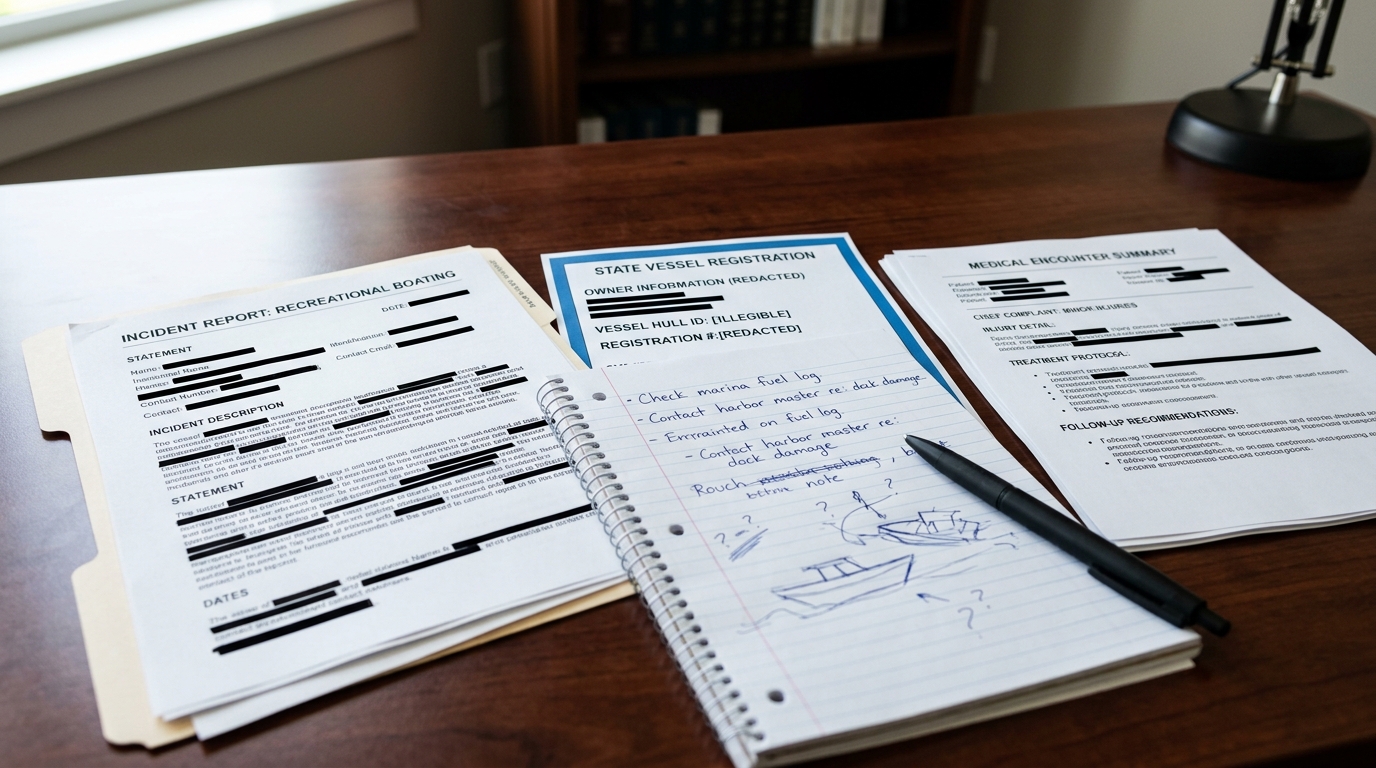
Recreational boating accidents can involve more than one responsible party. A crash, capsizing, wake injury, dock accident, rental boat incident, Jet Ski collision, or passenger injury may involve the boat operator, vessel owner, rental company, marina, maintenance provider, manufacturer, or another boater. People reviewing claim options after a watercraft accident may use a boating accident lawyer Long Island resource to understand how liability, evidence, and damages are generally evaluated.
Quick Answer
Liability after a recreational boating accident usually depends on who caused or contributed to the incident. Possible responsible parties may include the boat operator, vessel owner, another boat operator, rental company, marina, dock owner, tour or charter operator, repair company, product manufacturer, or public entity. Evidence such as accident reports, witness statements, photos, GPS data, weather conditions, boat maintenance records, alcohol evidence, passenger accounts, and medical records can help identify who may be legally responsible.
Key Takeaways
- Boating accident liability is often more complex than ordinary car accident liability.
- New York vessel owners may face responsibility when a vessel is operated negligently with their express or implied permission.
- Boat operators may be liable for reckless operation, unsafe speed, impaired boating, poor lookout, or navigation rule violations.
- Rental companies, marinas, maintenance providers, manufacturers, and dock owners may also be reviewed depending on the facts.
- New York boating accidents must be reported to New York State Parks within 5 days when they involve injury beyond basic first aid, death or disappearance, or property damage to any one party over $1,000. (NY State Parks)
- Evidence should be preserved quickly because boats are repaired, weather changes, GPS data may disappear, and witnesses may be difficult to locate.
- Public docks, public vessels, municipal launches, or government-controlled waterways may involve shorter notice deadlines.
Why Boating Accident Liability Can Be Complicated
Boating accident claims can be harder to investigate than road accidents. The accident may happen on open water, away from cameras, traffic signals, clear lanes, or many neutral witnesses. The scene may change immediately because boats move, waves dissipate, weather shifts, and damaged vessels are towed or repaired.
A boating accident may involve:
- Recreational motorboats
- Personal watercraft
- Jet Skis or WaveRunners
- Kayaks or canoes
- Sailboats
- Fishing boats
- Speed boats
- Wake boats
- Pontoon boats
- Charter boats
- Tour boats
- Rental boats
- Docked or moored vessels
Each accident type raises different liability questions. A collision may focus on speed, lookout, right of way, alcohol, or navigation rules. A capsizing may involve overloading, weather, passenger movement, or equipment failure. A dock injury may involve marina maintenance, lighting, cleats, ropes, ladders, or unsafe surfaces.
The U.S. Coast Guard’s 2024 recreational boating statistics identify operator inattention, improper lookout, operator inexperience, machinery failure, and navigation rules violations among the top primary contributing factors in accidents. (US Coast Guard News)
The Boat Operator
The boat operator is often the first party reviewed after a boating accident. Operators are responsible for navigating safely, maintaining lookout, controlling speed, responding to weather and water conditions, avoiding unsafe maneuvers, and following applicable boating rules.
A boat operator may be liable when the accident involves:
- Excessive speed
- Reckless operation
- Failure to keep a proper lookout
- Unsafe turns
- Boating while intoxicated
- Distracted operation
- Inexperience
- Failure to yield
- Navigation rule violations
- Creating a dangerous wake
- Operating too close to docks, swimmers, anchored boats, or shore
- Ignoring weather or water hazards
- Allowing unsafe passenger behavior
- Failing to carry required safety equipment
New York Navigation Law § 45 requires vessel operators to navigate in a careful and prudent manner, prohibits reckless operation, and states that no person may operate a vessel at a speed greater than is reasonable and prudent under the conditions and hazards then existing. (NYSenate.gov)
The Vessel Owner
The vessel owner may also be responsible, even if the owner was not operating the boat at the time. Ownership matters because the person who allows another person to operate the vessel may face liability in some circumstances.
New York Navigation Law § 48 states that every owner of a vessel used on New York navigable waters, or certain tidewaters bordering or within Nassau and Suffolk counties, is liable for death, personal injury, or property damage resulting from negligence in the use or operation of the vessel by someone operating it with the owner’s express or implied permission. (NYSenate.gov)
This can make several facts important:
- Who owned the boat?
- Who had permission to operate it?
- Was the permission express or implied?
- Was the operator qualified or experienced?
- Did the owner know the operator had been drinking?
- Did the owner know the boat had mechanical problems?
- Did the owner provide safety equipment?
- Did the owner allow unsafe passenger capacity or operation?
A vessel owner may argue that the operator did not have permission or used the boat outside the permitted purpose. These disputes require evidence, including registration records, text messages, witness statements, marina records, rental records, and insurance documents.
Another Boat Operator
Many recreational boating accidents involve collisions with another vessel. In those cases, the operator of the other boat may be responsible if unsafe conduct caused the crash.

Examples may include:
- Crossing too closely
- Failing to yield
- Failing to maintain lookout
- Speeding in congested waters
- Operating at night without proper lights
- Turning suddenly
- Operating while impaired
- Creating an unsafe wake
- Ignoring navigation markers
- Failing to avoid a visible hazard
A collision claim may require review of boat damage, passenger statements, witness accounts, GPS data, weather, speed estimates, photos, and any law enforcement or boating accident reports.
Boating While Intoxicated
Alcohol or drug use can be a major liability issue in boating accidents. New York Navigation Law § 49-A prohibits operating a vessel while intoxicated and includes blood alcohol concentration rules for vessels and public vessels. It also prohibits vessel operation while ability is impaired by drugs. (NYSenate.gov)
Alcohol-related evidence may include:
- Law enforcement reports
- Chemical test results
- Witness statements
- Bar, restaurant, marina, or event receipts
- Passenger observations
- Photos or videos
- Operator admissions
- Open container evidence
- Timeline of drinking before the trip
Alcohol evidence does not replace the need to prove causation, but it can be important when impaired operation contributed to speeding, poor lookout, unsafe turns, capsizing, or collision.
Passengers and Guest Conduct
In some cases, passenger conduct may contribute to a boating accident. A passenger might move suddenly, stand in an unsafe area, distract the operator, interfere with controls, overload one side of the boat, or ignore safety instructions.
Passenger-related liability issues may arise when:
- People ride on the bow, gunwale, or transom unsafely
- A passenger blocks the operator’s view
- A passenger distracts or pressures the operator
- A person jumps from the vessel without warning
- A passenger interferes with steering or throttle controls
- A group overloads the vessel
- Guests ignore repeated safety instructions
Passenger conduct does not automatically defeat an injury claim. The boat operator and owner may still have duties to manage safety, give instructions, control speed, and prevent known dangers. The facts determine how responsibility is divided.
Rental Boat and Jet Ski Companies
Rental companies may be reviewed when an accident involves a rented boat, Jet Ski, personal watercraft, kayak, canoe, paddleboard, or other watercraft. A rental company may not be liable simply because an accident happened, but its conduct can matter.
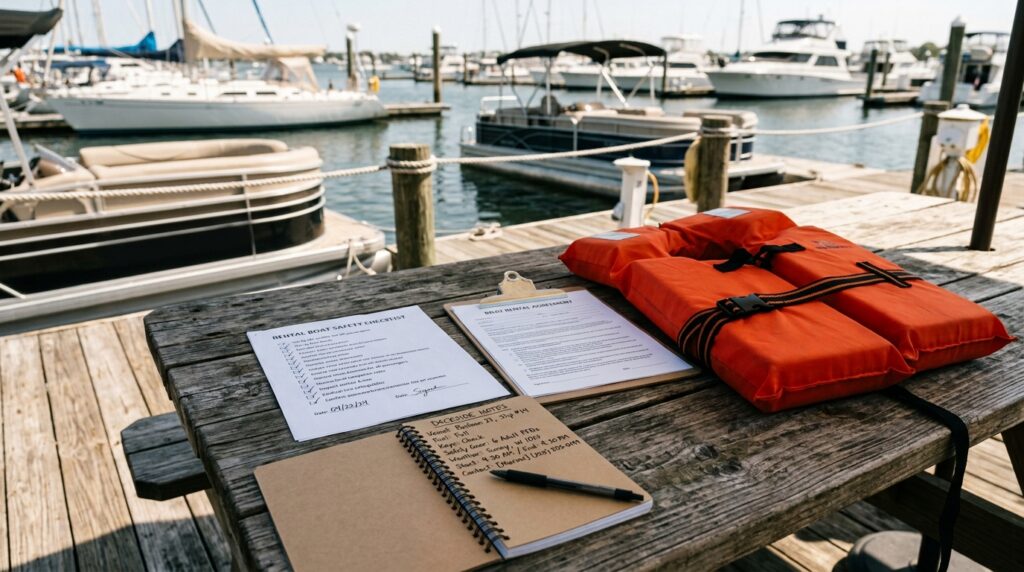
Potential rental company issues include:
- Renting to an unqualified or underage operator
- Failing to provide required safety instructions
- Providing unsafe or poorly maintained equipment
- Ignoring weather or water conditions
- Overloading a vessel
- Failing to provide life jackets
- Not explaining boundaries or restricted areas
- Not inspecting the vessel before rental
- Poor recordkeeping
- Failing to warn about known hazards
Rental records can be critical. These may show who rented the vessel, when it left, what instructions were given, what safety gear was provided, whether the operator signed forms, and whether the company inspected the vessel before and after use.
Marinas, Docks, and Property Owners
Not every boating injury happens on open water. Some accidents happen at docks, boat ramps, marinas, piers, slips, fuel stations, storage areas, or launch points. In those cases, property owners, marina operators, dock owners, maintenance contractors, or public entities may be reviewed.
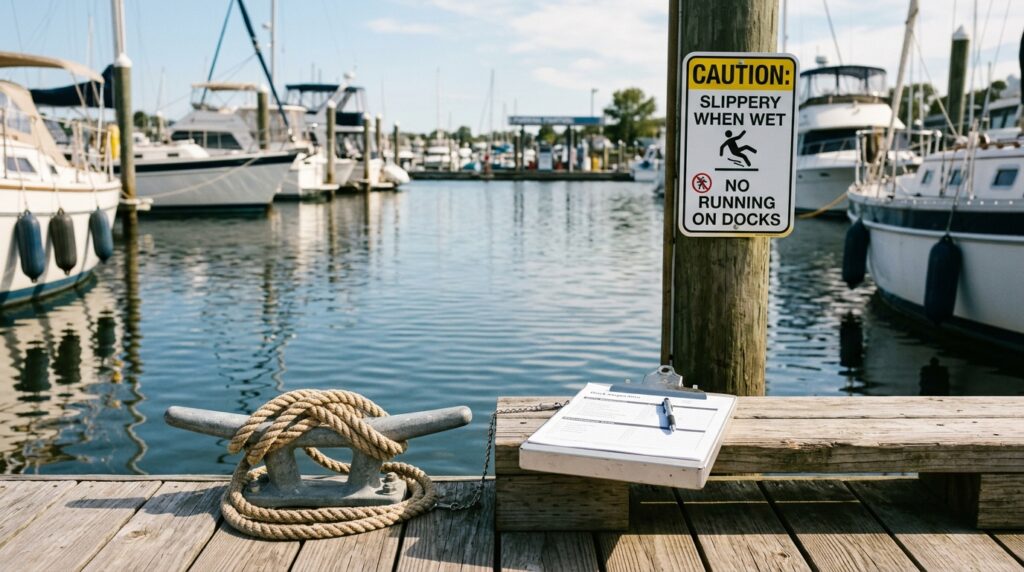
Potential dock and marina hazards include:
- Broken dock boards
- Loose cleats
- Poor lighting
- Slippery surfaces
- Missing handrails
- Unsafe ladders
- Exposed electrical hazards
- Fuel spills
- Poorly marked edges
- Defective ramps
- Unsafe gangways
- Unsecured ropes or cables
- Negligent supervision at a rental dock
A marina or dock claim may overlap with premises liability because the issue may involve ownership, control, maintenance, notice, inspection practices, and whether the dangerous condition should have been repaired or warned about.
A broader boat accident attorney guide can help readers understand why boating accident claims may require both waterway investigation and ordinary injury-claim evidence.
Maintenance and Repair Companies
Some boating accidents happen because the vessel or its equipment fails. A boat may lose steering, suffer engine trouble, have defective navigation lights, experience fuel system problems, or fail to respond properly during operation.
Maintenance-related issues may involve:
- Faulty steering
- Brake or throttle malfunction on personal watercraft
- Engine failure
- Fuel system defects
- Electrical problems
- Defective navigation lights
- Improper winterization
- Poor repairs
- Failure to inspect safety systems
- Defective bilge pumps
- Trailer or launch equipment failure
A maintenance provider, repair shop, marina service department, equipment installer, or vessel owner may be reviewed depending on who last inspected or repaired the boat.
Useful evidence may include repair invoices, maintenance logs, inspection records, warranty documents, photos, mechanic notes, parts records, and expert inspection findings.
Boat or Equipment Manufacturers
Product defects may also contribute to boating accidents. A claim may involve the manufacturer or seller of a boat, motor, steering system, fuel system, personal watercraft, trailer, ladder, safety device, or component part.
Possible product issues may include:
- Defective steering system
- Defective throttle or kill switch
- Faulty engine component
- Defective fuel tank or line
- Defective ladder or swim platform
- Electrical defect
- Defective life jacket or safety equipment
- Poor warnings or instructions
- Defective personal watercraft design
- Defective trailer equipment
Product-related claims usually require preservation of the vessel and component parts. Repairs, disposal, or replacement can make the claim harder to prove.
Charter, Tour, and Public Vessel Operators
Some accidents involve boats used for tours, fishing trips, water taxis, sightseeing, charters, or guided excursions. These cases may involve different duties because passengers rely on the operator, crew, owner, or company for safe operation.
Potential issues may include:
- Unlicensed or unqualified operator
- Failure to inspect the vessel
- Overcrowding
- Poor passenger instructions
- Unsafe boarding or disembarking
- Weather-related failures
- Inadequate safety equipment
- Failure to respond to emergencies
- Poor crew training
- Unsafe dock procedures
New York State Parks explains that public vessels operating on the state’s navigable waters must undergo annual inspection and that the operator must be licensed by the New York Office of Parks, Recreation and Historic Preservation. (NY State Parks)
Wake and Wave Injuries
A boat does not have to make direct contact to cause injury. A large wake or wave can injure passengers, swimmers, kayakers, paddleboarders, dock users, or people on nearby boats.
Wake-related claims may involve:
- Operating too fast near docks or anchored boats
- Creating a large wake in congested areas
- Ignoring no-wake zones
- Passing too close to smaller vessels
- Failing to slow near swimmers or paddlers
- Causing passengers to fall or be thrown
- Creating instability for another vessel
Wake cases can be difficult because the water condition may disappear immediately. Witnesses, nearby boaters, marina employees, video, GPS data, and operator statements may become especially important.
Weather and Hazardous Water Conditions
Weather can be a defense or a liability issue. A boat operator may argue that sudden weather caused the accident. However, poor decisions about weather can also support negligence.
Important questions may include:
- Was bad weather forecast before departure?
- Did the operator check conditions?
- Did the operator continue despite worsening conditions?
- Was the vessel appropriate for the water conditions?
- Were passengers warned?
- Was the boat overloaded?
- Did the operator return to shore when conditions changed?
- Were life jackets available and used?
- Did the operator travel too fast for visibility, waves, or congestion?
Weather records, marine forecasts, radar history, witness accounts, and timing can help show whether the conditions were sudden or reasonably foreseeable.
Public Entities and Government-Controlled Waterways
Some boating accidents may involve public docks, public boat ramps, municipal marinas, public vessels, park facilities, government-controlled launches, public bridges, or navigation aids. If a public entity may be involved, notice and deadline rules may be different.
New York General Municipal Law § 50-e generally requires a notice of claim within 90 days when a notice of claim is required for tort claims against public corporations. The notice must set out information such as the nature of the claim, the time and place where it arose, and the manner in which it arose. (NYSenate.gov)
This makes the exact location important. A recreational boating accident near a public launch, municipal marina, public dock, state park, or public authority facility may need early review.
Accident Reporting After a New York Boating Accident
Boating accident reporting can be important for both safety and claim documentation. New York State Parks states that boating accidents must be reported within 5 days if they result in injury requiring medical care beyond basic first aid, death or disappearance of a person, or damage to any one party over $1,000. (NY State Parks)
New York Navigation Law § 47-B also requires a written report within five days when a vessel accident involves death, injury, disappearance under the water, or property damage to one person over $1,000. (NYSenate.gov)
A report can help document:
- Date and time
- Waterway or location
- Vessel information
- Operator identity
- Owner identity
- Passenger information
- Injury details
- Property damage
- Weather and water conditions
- Witnesses
- Law enforcement involvement
A report is not always the full story, but it can be an important starting point for identifying liable parties.
Evidence That Can Strengthen a Boating Accident Claim
Boating accident evidence can disappear quickly. Boats may be repaired, GPS tracks deleted, witnesses leave the marina, and water conditions change. Evidence should be preserved as early as possible.
Helpful evidence may include:
- Boating accident report
- Photos of all vessels involved
- Photos of injuries
- Photos of the dock, marina, ramp, or water area
- Witness names and contact details
- Passenger statements
- Operator information
- Vessel registration records
- Ownership records
- Rental agreements
- Marina records
- Maintenance logs
- Repair invoices
- Safety equipment photos
- GPS data
- Chartplotter data
- Phone photos or videos
- Weather and marine forecasts
- Alcohol-related evidence
- Medical records
- Insurance documents
- Towing or salvage records
- Expert inspection findings
The strongest claim usually connects the accident mechanism, responsible party, injury, and damages through records rather than assumptions.
Medical Records and Injury Documentation
Medical care should come first after a boating accident. Watercraft injuries may involve impact, drowning risk, propeller injuries, fractures, head trauma, back injuries, hypothermia, burns, cuts, or soft tissue trauma.
Common boating accident injuries may include:
- Traumatic brain injuries
- Concussions
- Neck injuries
- Back injuries
- Spinal injuries
- Fractures
- Shoulder injuries
- Knee injuries
- Lacerations
- Burns
- Electrocution injuries
- Drowning-related injuries
- Hypothermia
- Internal injuries
- Chronic pain
- Wrongful death
Medical records help show when symptoms began, what injuries were diagnosed, what treatment was required, and whether the injury affected work or daily life. Delayed treatment may give insurers room to dispute causation or injury severity.
Insurance Issues After a Boating Accident
Boating accident insurance can be more complicated than auto insurance. Coverage may depend on vessel ownership, permission, rental agreements, homeowner’s policies, boat policies, marina insurance, commercial coverage, or umbrella policies.
Potential insurance sources may include:
- Boat owner’s insurance
- Operator’s insurance
- Homeowner’s insurance
- Umbrella or excess coverage
- Rental company insurance
- Marina liability insurance
- Commercial vessel insurance
- Product liability coverage
- Property owner coverage
- Public entity coverage in limited cases
Insurance companies may dispute whether the operator had permission, whether the vessel was being used commercially, whether exclusions apply, whether alcohol was involved, or whether the injury happened on the boat, dock, or shore.
Comparative Fault in Boating Accidents
Boating accident defendants may argue that the injured person shared fault. They may claim the passenger ignored safety instructions, failed to wear a life jacket, stood in an unsafe place, distracted the operator, jumped unexpectedly, or caused the boat to become unstable.
Partial fault does not automatically end a claim, but it can affect how damages are evaluated. Evidence matters because passenger conduct, operator instructions, vessel condition, speed, weather, and witness statements may all affect the fault analysis.
Deadlines for Recreational Boating Accident Claims
Deadlines depend on the claim type and responsible parties. The New York Courts statute of limitations timetable lists three years for many negligence-based personal injury claims and two years for wrongful death claims. It also lists three years for product liability claims. (New York Courts)
Shorter deadlines may apply if a public entity, public vessel, public dock, municipal marina, public boat launch, public authority, or government-controlled location is involved. Claims involving boating accident reports, insurance notice, rental agreements, or evidence preservation may also have practical deadlines much shorter than the lawsuit deadline.
Common Mistakes After a Boating Accident
Some mistakes can make a recreational boating accident claim harder to prove.
Common mistakes include:
- Not seeking medical care promptly
- Failing to report a qualifying boating accident
- Not identifying the operator and vessel owner
- Not getting witness or passenger information
- Not photographing vessel damage
- Not preserving GPS, chartplotter, or phone data
- Allowing the boat to be repaired before inspection
- Throwing away damaged safety equipment
- Not documenting weather or water conditions
- Not saving rental or marina documents
- Speaking casually with insurance adjusters
- Accepting a quick settlement before injuries are fully known
- Missing public entity notice deadlines
A strong claim usually depends on early reporting, preserved vessel evidence, medical documentation, and identification of every potentially responsible party.
When Legal Guidance May Be Useful
Legal guidance may be useful when a boating accident causes serious injury, involves multiple boats, includes a rental or charter vessel, raises alcohol issues, involves unsafe docks or marinas, or requires preservation of vessel data and maintenance records.
A boating accident claim may require review of navigation rules, owner liability, operator conduct, rental agreements, vessel maintenance, alcohol evidence, product defects, dock conditions, insurance coverage, medical records, and deadlines.
People researching local legal resources may review a Farmingdale legal office location when looking for Long Island boating accident claim information. Publicly available personal injury case results may also provide general context, although every case depends on its own facts, evidence, injuries, insurance coverage, and applicable law.
FAQs About Recreational Boating Accident Liability
Who can be liable after a recreational boating accident?
Potentially liable parties may include the boat operator, vessel owner, another boater, rental company, marina, dock owner, maintenance provider, charter operator, product manufacturer, or public entity. Liability depends on control, negligence, permission, unsafe conditions, and available evidence.
Can a boat owner be liable if someone else was operating the vessel?
Yes. New York Navigation Law § 48 addresses owner responsibility for injuries or property damage caused by negligent vessel operation when the vessel is operated with the owner’s express or implied permission. The facts of ownership and permission can be important.
What evidence is important after a boating accident?
Important evidence may include the boating accident report, photos, witness statements, passenger accounts, vessel registration, rental records, marina documents, maintenance logs, GPS data, weather records, alcohol evidence, medical records, and insurance documents.
Does a boating accident have to be reported in New York?
A New York boating accident must generally be reported within 5 days if it involves death, disappearance, injury requiring medical care beyond basic first aid, or property damage to any one party over $1,000.
Can a rental company be responsible for a Jet Ski or boat accident?
A rental company may be reviewed if it provided unsafe equipment, failed to give proper safety instructions, rented to an unqualified operator, ignored weather or water hazards, failed to provide required safety gear, or failed to inspect and maintain the vessel.
Final Thoughts
Recreational boating accident liability can involve more than the person steering the boat. Vessel owners, other operators, rental companies, marinas, repair providers, manufacturers, charter operators, and public entities may all need review depending on the facts. The strongest claims usually depend on prompt medical care, accident reporting, preserved vessel evidence, witness information, weather records, insurance review, and a clear explanation of how the accident happened.